
Ripa and Press freedom
MPs approve statute to protect sources
Tuesday 17 March The Commons has approved a statutory instrument that will require a judge to authorise any examination of journalists' communications data in an attempt to identify sources. MPs also agreed that special note should be taken when looking at phone or email records of people in sensitive occupations such as journalists, doctors and lawyers.
Authorities that wish to examine such records will not, however, have to inform the person concerned. The statutory instrument approved by the Commons and to be put before the Lords was introduced in response to protests after police looked at the Sun political editor's phone records to try to find the source of the Plebgate story. Press Gazette started a campaign to require judicial approval before such investigations went ahead. Now a judge will have to sign off applications relating to journalistic sources unless there is an immediate threat to life. Press Gazette's Save Our Sources campaign included approaching every force in the country to ask about their use of the Regulation of Investigatory Powers Act and setting up a petition to stop police acting without outside authority. That secured 1,600 signatures. The Society of Editors joined in with a letter to the Home Office signed by 100 editors, including those of every national daily paper. The Commissioner for the Interception of Communications conducted his own investigation into the use of RIPA and concluded that the law needed to be changed. Today's Commons move is an interim measure, requiring police to use the provisions of the Police and Criminal Evidence Act until new rules governing RIPA are approved. Press Gazette continues to seek information about how many journalists' records have been examined by police under RIPA, but 25 forces are now following the Metropolitan Police's example in refusing to respond to the website's Freedom of Information requests on the ground that they are vexatious. SubScribe: RIPA and Press freedom RIPA and protection of sources Editor's blog: Bouquets and brickbats: a tale of editorship Read more from Press Gazette on today's developments here See the new guidelines in full here Law to curb data checks before election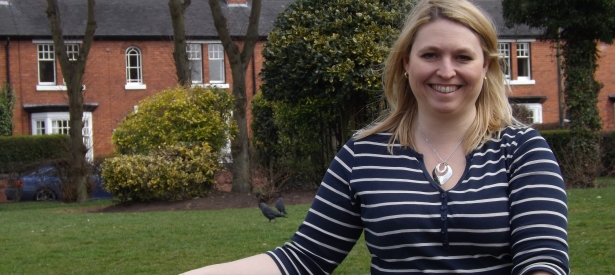
Karen Bradley: promised interim measures now, legislation in the new parliament

Saturday 21 February, 2015 New rules are to be introduced before the general election to require police who want to track journalists' sources will have to seek a judge's permission.
The Government has agreed to push through an interim measure before May and promised full legislation on the use of the Regulation of Investigatory Powers Act (RIPA) in the new parliament. The move, announced in a letter to MPs from Home Office minister Karen Bradley, is a victory for Press Gazette and its Save Our Sources campaign, which was started less than six months ago when it was disclosed that police had examined the Sun political editor's phone records to uncover the source of the Plebgate story. Press Gazette started a change.org petition, which gathered more than 1,600 signatures and prompted the acting interceptions commissioner to write to every police force in the country asking them to detail their use of the Act in relation to journalists. The findings were reported this month and showed that police had used their powers under the Act to look at 82 journalists' data over a three-year period, most of them without proper justification. Read more here The commissioner's office recommendation that a judge should have to authorise any use of the Act to uncover sources was accepted by David Cameron and Theresa May, but it was not clear that action would be taken before the election. The Liberal Democrats tabled an amendment to the Serious Crime Bill, which will be debated in Parliament tomorrow, but this was rejected by the Government - which has now come up with another solution. In her letter to MPs today Bradley says: "There is no other suitable legislative vehicle to take this forward in the current Parliament. That being the case, we intend to put in place an interim solution pending legislation in the new Parliament." Under the interim arrangements, police would have to use production orders authorised by a judge under the Police and Criminal Evidence Act to access phone or email records to uncover journalistic sources. Bradley added that the Government would "shortly" publish draft clauses to reform RIPA after the election. Dominic Ponsford, editor of Press Gazette whose campaign has been nominated for two awards, told SubScribe: 
If we hadn't kicked up a fuss about this as an industry we might as well have drawn stumps and given up on the idea of a free Press. It's a great victory for journalism, common sense and, most of all, whistleblowers GCHQ's former legal director told a seminar at Oxford University earlier this month that the effect on journalists' sources was not considered in the drafting of RIPA. Michael Drury said that the focus had been on complying with Article 8 of the Human Rights Convention, which protects privacy, rather than Article 10, which concerns freedom of expression. The Bureau of Investigative Journalism, which is challenging the Government's surveillance activities at the European Court, said that Sir David Omand, a former GCHQ director who was permanent secretary at the Home Office when the law was drafted, said from the floor: "I can confirm we didn't talk about journalists."
Read more from the BIJ here Read more from Press Gazette here Gameoldgirl's Notebook: Triumph and triumphalism RIPA campaign nominated for two awards Judge 'must approve hunt for sources' Sir Anthony May was recovering from an accident when Sir Paul Kennedy started the RIPA inquiry Sir Anthony May was recovering from an accident when Sir Paul Kennedy started the RIPA inquiry
Wednesday 4 February, 2015
Police should have to seek a judge's authority before looking at phone or email records to discover journalists' sources, the Interception of Communications Commissioner told the Prime Minister today. An inquiry by Sir Anthony May's office found that police had accessed the communications data of 82 journalists over the past three years on the say-so of senior officers, even though most of their applications did not justify such action. The result was that 68 sources were charged with criminal offences and 15 lost their jobs. The inquiry report concluded, however, that police were not "randomly trawling" journalists' communications records to uncover their sources. The vast majority of the checks on journalists' phone records had been carried out under Operation Elveden, the inquiry into alleged illegal payment of public officials for stories. In these cases, police were mostly following up information supplied by News International's Management and Standards Committee, which was set up after the hacking scandal in 2011 and which voluntarily handed hundreds of thousands of documents to the police. Elveden accounted for 484 of the 608 applications for access to journalists' data (80%) submitted under the Regulation of Investigatory Powers Act. If that investigation were discounted, the result would be an average of less than one application per force per year. Applications submitted by officers working on the Operation Weeting investigation into phone hacking were excluded from the commissioner's report because he was satisfied that the emphasis of that investigation was not to identify sources, but the report adds: "The fact that a significant amount of the data acquired relates to journalists inevitably raises concerns that the analysis of this data whilst in the possession of the police may subsequently be used to identify journalistic sources." The commissioner's inquiry was started last October after the disclosure that police had examined journalists' phone records to find the sources of the Plebgate and Chris Huhne speeding ticket stories. Largely in response to Press Gazette's Save Our Sources campaign, the interim commissioner Sir Paul Kennedy wrote to every force in the country asking them to detail their use of RIPA to investigate the leaking of information to journalists over the previous three years. In all, 19 forces had used the act as part of 34 investigations into 242 suspected leakers, who were overwhelmingly police, prison, secure hospital or military staff. Journalists' data were sought in 24 of them. Asked whether their investigations had identified the source and, if so, what action had followed, the forces told the commissioner that 68 people had been charged - 64 under Operation Elveden - 15 sacked and 5 had been given "management advice". No further action was taken in 20 investigations and the CPS decided against bringing charges after being shown the files of another 4. Disciplinary proceedings were expected in 3 investigations and 2 more inquiries were ongoing. The commissioner's report emphasises the "chilling effect" on free speech of the identification of journalistic sources and highlights Article 10 of the European Convention of Human Rights, which enshrines the right to freedom of expression and sets out circumstances in which it may be curtailed: 
The exercise of these freedoms, since it carries with it duties and responsibilities, may be subject to such formalities, conditions, restrictions or penalties as are prescribed by law and are necessary in a democratic society, in the interests of national security, territorial integrity or public safety, for the prevention of disorder or crime, for the protection of health or morals, for the protection of the reputation or rights of others, for preventing the disclosure of information received in confidence, or for maintaining the authority and impartiality of the judiciary." The inquiry found that the majority of applications it examined did not fulfill RIPA's requirements that access to data be necessary and in proportion with the suspected offence.
The report puts that failing down in part to the fact that Home Office and ACPO guidance on the use of RIPA, did not give sufficient weight to Article 10. As a result police chiefs did not ask why it was more important to identify the journalist's source than to protect their anonymity. Where that information had been sought - usually in forces where the police chief had taken legal advice - several applications were refused. It therefore recommended that judicial authorisation must be obtained in cases where communications data was sought to determine the source of journalistic information. It also recommended that in cases involving a journalist unrelated to their work - such as where they were a victim or suspect of a crime - the person authorising access to data should give "adequate consideration" to the necessity, proportionality, collateral inclusion and possible unintended consequences. You can read the full inquiry report here 'Annoying' Press Gazette vexes the Met
The Metropolitan Police have refused to respond to a Freedom of Information request from Press Gazette on the grounds that its repeated questioning is "vexatious" and "annoying". The website has submitted six requests about the force's use of RIPA to look into journalists' phone records. Even Michael Howard withstood the same question 14 times from Jeremy Paxman before cracking. This doesn't look good for the Met from any angle. (04/02/15) Read more from Press Gazette here Lawyers join battle to curb police powersTuesday 20 January, 2015 Lawyers and social workers have come together in a professional coalition with the NUJ to protest about proposed amendments to the Regulation of Investigatory Powers Act that allow police to continue to look at phone and email records without judicial approval.
Today is the last day for representations to the Home Office on the draft guidelines published by Theresa May before Christmas. Press Gazette has submitted a petition with 1,650 signatures and a joint letter with the Society of Editors, whose 100 signatories include every national newspaper editor. Now the Bar Council, Law Society and the British Association of Social Workers have submitted a joint letter with the NUJ under an umbrella entitled Professionals for Information Privacy Coalition. Bar Council chairman Alistair MacDonald told Press Gazette: "If the state eavesdrops on privileged communications to gather intelligence, clients will feel unable to speak openly with their lawyers. In many cases, the effect will be that such cases cannot properly be put and a just result will not be achieved.” The submission comes as the Guardian reports that investigative journalists are regarded by the security services as being in the same league as terrorists and hackers and that GCHQ has emails of Guardian, Sun and BBC journalists on file. The paper quotes a restricted document for army intelligence staff as saying: Journalists and reporters representing all types of news media represent a potential threat to security. Of specific concern are ‘investigative journalists’ who specialise in defence-related exposés either for profit or what they deem to be of the public interest." GCHQ declined to comment. The RIPA consultation process closes at 11.45pm tonight. To make your views known, email the Home Office here. 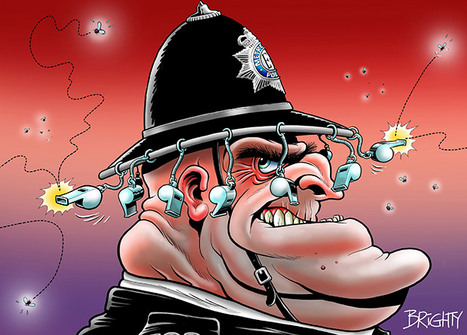
The Brighty view of police use of Ripa, as seen in the Sun
Peer fails to force RIPA change
Wednesday 29 October A Liberal Democrat peer failed last night to persuade the Government to insist that police get permission from a judge before looking at journalists’ phone records.
Lord Strasburger had put forward an amendment to the Serious Crime Bill, but Lady Williams of Trafford, for the Government, said that it was not necessary, given the strict regulation the Regulation of Investigatory Powers Act already contained, and additional safeguards that were being put in place. The Justice Minister Simon Hughes had said earlier this month that provisions would be put in place to ensure that a judge's authority was required, rather than that of a senior police officer as at present. The Home Office had also said that the administration of RIPA would be reviewed and a new code on how it should be applied would be laid before Parliament by Christmas. Lord Strasburger had told the Lords: "The purpose of this amendment is to graft on to RIPA similar protections to those already applying under PACE: judicial oversight of applications involving journalists’ records and legally privileged information, and to require an open hearing with both sides represented. The judge will need to be satisfied that disclosure is necessary for the detecting or preventing of serious crime, and that the request for data is proportionate to what is being sought to be achieved with it. The judge will have to have particular regard to the protection of legally privileged information and journalistic sources." His initiative, which had support from members of all parties, came a month after Press Gazette began its campaign against police using the legislation to spy on journalists, starting with a change.org petition. At the same time, the Bureau of Investigative Journalism laid a case against the use of Ripa in the European Court of Human Rights. Since then
Guest blog, Tim Crook Threat to sources is a threat to democracy Police must detail spying on journalists
Monday 6 October Every chief constable in Britain is being told to produce full details of how they are using the Regulation of Investigatory Powers Act (Ripa) after complaints that some forces are taking advantage of the legislation to spy on journalists and uncover their sources.
Sir Paul Kennedy, acting interception of communications commissioner, said today: "My office will undertake a full inquiry into these matters and report our findings to the Prime Minister and publicly so as to develop clarity in relation to the scope and compliance of this activity...I fully understand and share the concerns raised about the protection of journalistic sources so as to enable a free Press." The move comes the day after the Mail on Sunday splash on how Kent Police trawled through its records to discover the source of the speeding ticket story that sent Chris Huhne to jail. Press Gazette had already started the Save Our Sources campaign to protect journalists from misuse of the act - which was passed as an anti-terrorism tool - after the disclosure that the Metropolitan Police had gone through Sun phone records to find out who leaked the Plebgate story. Press Gazette also reported that Service personnel were now required to report any social contact with journalists - even within their families. Members of the armed forces were also being told to notify press officers if they mix with people associated with the media, such as "academics, representatives of industry and think-tanks". As a result it set up a change.org petition, which now has more than a thousand signatures. Supporters include Keith Vaz, chairman of the Home Affairs Select Committee, who said at the weekend that he would be challenging Kent Police and would also suggest that the information commissioner be invited to appear before his committee. The Liberal Democrats decided at their conference yesterday to back the campaign after hearing from the Hacked Off leading light Evan Harris. The Bureau of Investigative Journalists is already challenging Ripa in the European Court of Human Rights in the light of the surveillance programmes revealed by Edward Snowden and the Met's review of Tom Newton Dunn's phone calls. The Times reported last month that authorities made 514,608 requests for data under the act last year. Read more on this story here and you can sign the petition here. Editor's blog Press freedom, Hacked Off and credit where it's due |
|


Karen Bradley's promise comes just 24 weeks after that first story - an astonishingly speedy and successful outcome for Press Gazette under the leadership of Dominic Ponsford.
Ponsford and his news editor Will Turvill have been nominated for big two campaigning awards for their efforts. They are up against stiff opposition and may not emerge triumphant. But their industry should make some special effort to acknowledge their work - some recognition at the Press Awards would be appropriate - on behalf of their readers: the journalists in this country. Ponsford is, you see, an editor who understands his readership. - Bouquets and brickbats 
After the Mid Staffs hospital scandal, this Government promised to protect people who spoke out about malpractice in all walks of life. But who will come forward about anything if their lives are going to be made a misery and their livelihoods put at risk?
It is essential that people are able to talk to journalists on matters of public interest without fear that their cover will be blown. It is essential that lawyers are able to speak to their clients, doctors to their patients without someone checking on when and where they had their conversations. Protecting sources 
This sheer scale of RIPA requests in the UK is astounding. If some English-born Snowden had leaked the extent that the police and other UK public bodies routinely obtain the telecoms data of citizens then there may have been angry uproar; but the British state sensibly makes no secret of it and just publishes the aggregate totals in obscure official reports, and so everyone shrugs. So it is likely that there will be about half a million RIPA requests this year, as there has been for each of the last few years; but the only one to create any media storm was the one which has come to light about a journalist.

Fewer whistleblowers mean fewer stories. Fewer stories mean the publication of less public-interest information. Less information means an enhancement of our already secretive society. The police are misusing Ripa to discover how journalists obtain stories.

The Metropolitan Police secretly snooped on the call records of Sun Political Editor Tom Newton Dunn, to hunt down the source of the 2012 “Plebgate” story.
When the News of the World phone-hacking scandal broke, the Met launched the biggest investigation in British criminal history... By contrast, Scotland Yard’s response this time has been “move along, nothing to see here”. They insist that spying on The Sun to catch a whistle-blower was “proportionate, legal and necessary”. So it’s official. Phone-hacking is not a crime or a scandal — so long as it’s the secret police hacking the tabloid Press. 
The police use the same process that a journalist and editor use when they decide to investigate someone. The journalist and editor can decide the public interest to investigate someone. They do not have to go to the judge to exercise that public interest. Unlike the journalists, the police are legally required to record their decisions. They have to sign the order authorising the investigation and retain a record of that decision. In this way, the police are accountable to the Data Protection Act, the Freedom of Information Act, and the Surveillance Commissioner.
|
Please sign up for SubScribe updates
(no spam, no more than one every week or two)
|
|
|